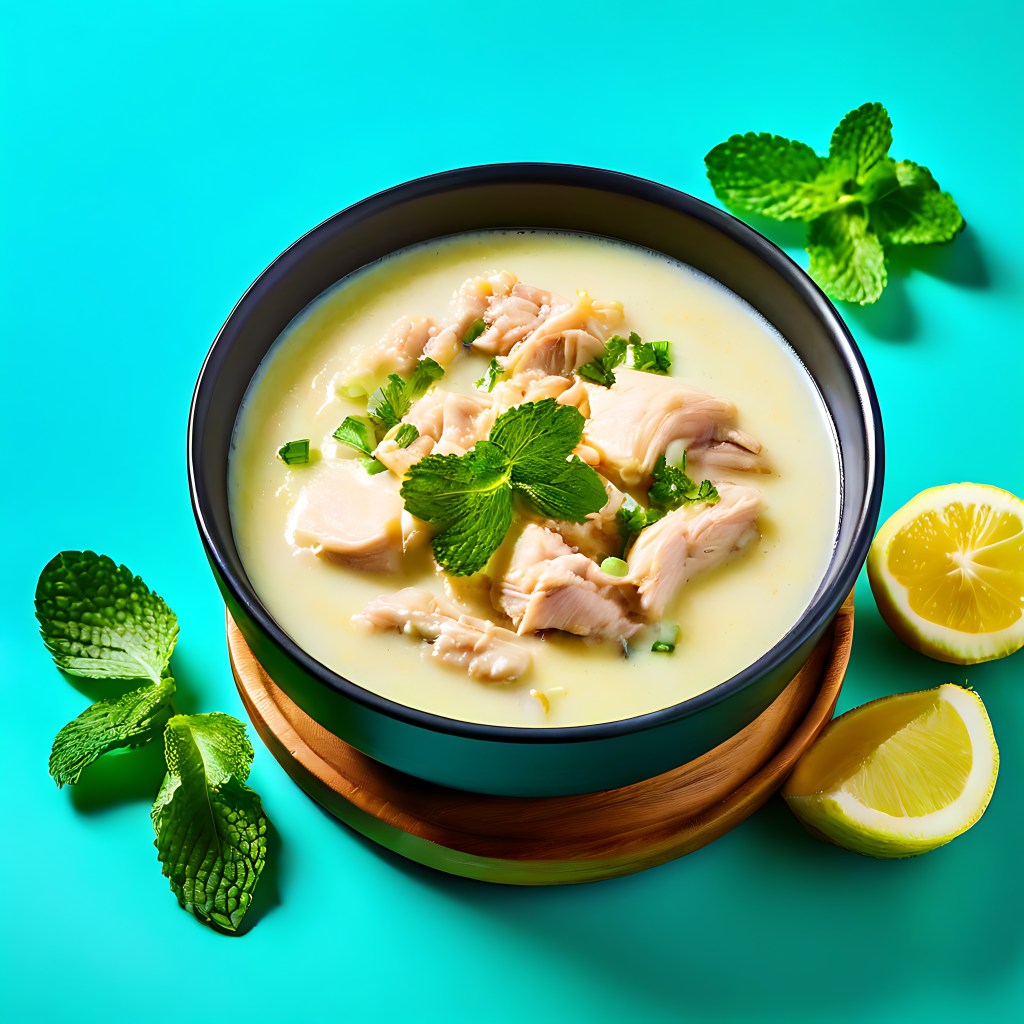
It was the first cold week of autumn — the week pharmacies start selling tissues by the case. A woman in her thirties came to my window with the usual armful: a decongestant, something for her throat, a box of paracetamol. Her medicine was fine. Nothing to fix.
Then she asked the question that actually mattered.
“I heard chicken soup is good for a cold. But my mother says chicken is a fāwù — a food that makes illness worse. So which is it? Drink it, or avoid it?”
If you didn’t grow up in China, that word needs a second. Fāwù has no clean English equivalent. The nearest idea is a “trigger food” — an old Chinese belief that certain foods (chicken, eggs, seafood, beef, spicy dishes, mushrooms) can “flare up” an illness, slow healing, or set back a chronic condition. There’s no standard list and no medical definition; it shifts by family, by region, and by what’s wrong with you. Western kitchens keep their own versions — the old rule about skipping dairy when you have a cold is the same instinct in another language.
Two old beliefs, meeting at my counter. One from the West, one from home. I get a version of this every autumn, and the honest answer is stranger than either story — because the two halves of her question don’t have the same evidence behind them. One of them has almost none.
The short answer
Chicken soup will not cure your cold. Nothing does — it’s a virus, and it runs its course. But a bowl of hot soup can make you feel measurably better while you wait, and for most healthy adults there’s no reason to fear it. As for fāwù — chicken making a cold worse — I can’t find any evidence for it at all.
There’s one exception, and it’s the one nobody mentions: the salt. I’ll come back to it.
Where the chicken-soup legend actually comes from
Most people assume this is ancient medicine — some medieval physician prescribing soup for a cold. The name you’ll see quoted is Moses Maimonides, the 12th-century physician and philosopher. “Maimonides recommended chicken soup for the common cold.” It’s everywhere.
He didn’t. Go back to what he actually wrote, and Maimonides praises chicken — especially the broth of an old hen — for asthma, for certain chronic fevers, and for helping thin patients regain weight after illness. Not once for the common cold. The famous claim is a misquote that got copied until it hardened into fact.
‘Jewish penicillin’ sounds ancient. The OED’s earliest written evidence for the phrase dates to 1961 — and it only earned its own dictionary entry as recently as 2019, filed as a “humorous name” for chicken soup. That’s the whole documented record.
So the pedigree is thinner than it looks. The question is whether the actual science did any better. It did — a little.
What the three key studies really show
1978, the mucus study. Fifteen healthy volunteers had the speed of their nasal mucus measured before and after drinking hot chicken soup, hot water, or cold water. Hot soup won: mucus flow rose from about 6.9 to 9.2 mm/min. Impressive — until you notice plain hot water did nearly as much (6.2 to 8.4). So much of the “effect” is just heat and steam. The authors still suspected soup had something extra, but fifteen people who weren’t even sick is thin ground.
2000, the lab-dish study. The one headlines love. Chicken soup, in a laboratory dish, slowed the movement of neutrophils — immune cells that rush to inflammation. The authors’ own caution, in their own paper: this was a dish, not a person. Nobody has shown the active ingredient survives your stomach to reach your airways. And slowing neutrophils isn’t automatically good; those cells are how you clear an infection.
2025, the review. The newest word is a systematic review in Nutrients: 4 studies, 342 people. The conclusion is modest and, to me, believable — soups (usually chicken) gave a mild benefit for symptom relief and nudged some inflammation markers down. Certainty: low to moderate — the authors’ own narrative estimate, not a formal GRADE rating. Only one of the four studies even measured how long the cold lasted, and three of the four were done in Asia. That single trial hints at a day or two shaved off — but its individual numbers mostly missed statistical significance, and the authors declined to pool the studies into one figure. That’s the ceiling of a mixed bag, not a clean result. Don’t build a billboard on it.
And the big institutions? Mayo Clinic lists warm liquids including chicken soup among things that might help, mostly by getting mucus moving. MedlinePlus, blunter: a popular home remedy since at least the 12th century that “will not do you any harm, but it will not cure your cold.” The CDC and NIH’s complementary-medicine center don’t mention it at all.
Mild, real, and much smaller than the legend.
Why it helps, graded honestly
| Claim | Verdict | Why |
|---|---|---|
| Hydration | Supported | Fluids thin mucus and prevent dehydration — everyone agrees |
| Warm liquid and steam | Supported, but small and brief | The 1978 study; Mayo |
| Protein and energy when you’re not eating | Reasonable, indirect | Common sense; no cold-specific trial |
| Electrolytes (potassium, phosphorus, chloride) | Reasonable, limited | No evidence it shortens anything |
| Anti-inflammatory | Lab-dish only | The 2000 study; never shown in people |
| Cysteine thins mucus | Speculation | Borrowed from a drug; no dietary proof |
| Carnosine fights flu | Unverified | Secondhand reports only — I won’t use it |
Notice which row does no work: the fancy ones. The honest case for soup is the boring row at the top.
The exception nobody mentions: the salt
“Drink plenty of soup” sounds like the safest advice in medicine. For some people it isn’t.
A cup of canned chicken noodle soup runs about 831 mg of sodium — some chunky ready-to-eat versions closer to 867 mg (it varies by brand, so check the label). The daily upper limit for most adults is 2,300 mg. So one cup is a third of your entire day, and nobody drinks one cup when they’re sick. If you have high blood pressure, heart failure, or kidney disease, that’s not a rounding error. Make it at home and you control the salt; buy it and read the label, then pick low-sodium.
This is the part that never makes the “grandma’s remedy” articles. It’s exactly the part a pharmacist should say out loud.
Children need their own paragraph. The soup is fine — warm, hydrating, comforting. The sodium isn’t; small bodies get the same salt with less room for it. And while we’re here: OTC cough and cold medicines aren’t for children under 4 (Mayo) and aren’t recommended under 6 (CDC); honey is off the table under 1 year (infant botulism); hard lozenges are a choking risk for little ones. Every autumn someone asks me about soup and leaves with cough syrup for a toddler. I’d rather say it now.
What I told her
So I told her what I tell everyone who asks this.
“Drink the soup.”
She looked at me, half-smiling. “That’s it? That’s your professional advice?”
“That’s the easy part,” I said. “It’s warm, it gets fluid into you, and there’s nothing in it that’s going to make a cold worse.”
“And the fāwù thing?”
“Fāwù is a family rule, not a test result,” I said. “If chicken really made colds worse, I’d have noticed at the counter by now.”
She paused. “So my mother’s been wrong all these years.”
“Your mother’s not wrong,” I said. “She’s answering a different question — what to feed someone who’s weak. The research answers a different one: does it help the symptoms. Different questions. They don’t have to agree.”
She laughed. “So the whole chicken-soup thing is real?”
“The soup is real,” I said. “The reason everybody gives you for it is made up.”
That’s the real ending. Not “grandma was wrong.” Grandma wasn’t. It’s that grandma was right, and the doctors who keep quoting the 12th century never quite knew why.
Rest. Fluids. Something warm. Save the antibiotics for when they matter. That’s most of what a cold asks of you.
This article is general health information, not personal medical advice. If you’re pregnant or breastfeeding, have a chronic condition such as high blood pressure or kidney disease, or you’re asking about a child under 6, talk with your own pharmacist or doctor before acting on anything here. A cold that lasts more than 10 days — or gets worse after it seemed to improve — needs a clinician’s eyes.

Leave a comment