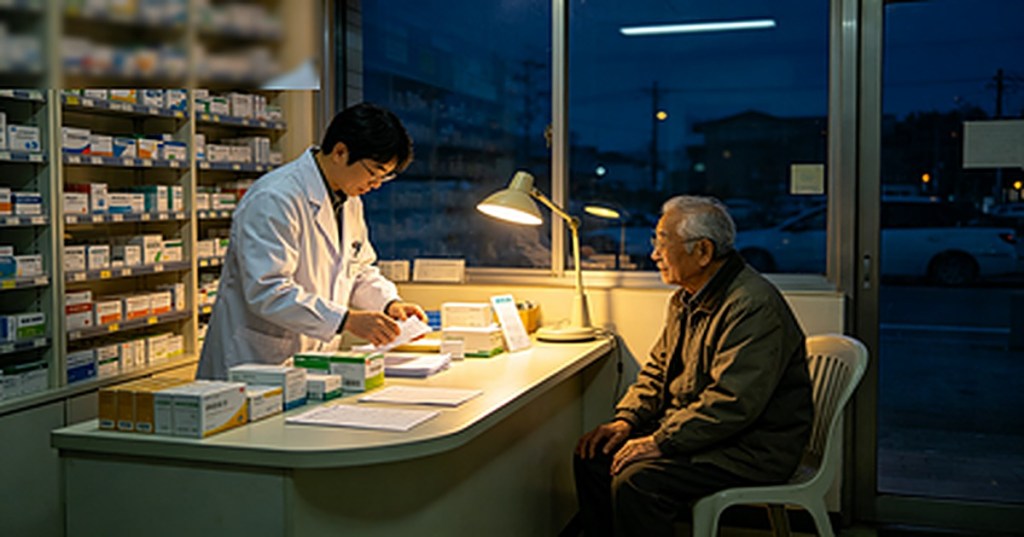
He came in holding a folded piece of paper. Not a real prescription — the handwriting was loose, unfamiliar.
“Pharmacist Lin, could you tell me what this one is for?”
I read it. Mostly blood-moving herbs. The kind an old Chinese medicine doctor would write. Common names, nothing exotic. So I asked who it was for.
“My wife. She has cancer. A traditional Chinese doctor wrote it.”
He wasn’t asking me to doubt anything. He just wanted someone to tell him it made sense.
I could have said, “It won’t hurt.” I could have just nodded. Instead I said the true thing: there is no evidence this formula does anything for cancer — and I wasn’t sure it wouldn’t work against the treatment she was already on.
He thanked me. Refolded the paper along the same creases. Walked out.
I watched his back get smaller.
I’ve replayed those ten seconds more times than I can count. As a pharmacist, I was right. But he came in with hope and left with less of it, and I’m the one who took it. Being right took ten seconds. What it cost him, I’ll never know.
Maybe that paper was never about a cure. Maybe it was about not standing still while the person you love slips away.
I still don’t know if I did the right thing that day. I only know that the truth, said too fast, can land like a door closing.
This is a personal reflection, not medical advice. If you or someone you love is living with cancer, talk with your oncology team before starting, stopping, or adding any treatment — including herbal remedies. Nothing in this story is being recommended or dismissed.

Leave a comment