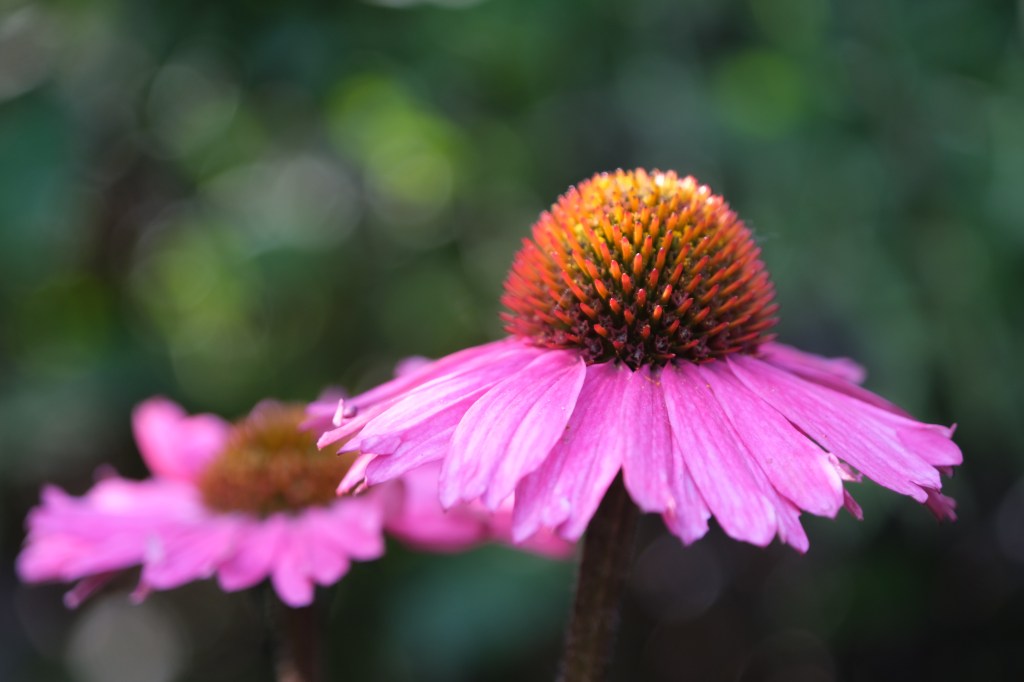
In my corner of the hospital pharmacy, cold season has a mascot. It isn’t the flu shot poster. It’s the echinacea bottle — purple flower on the label, “Immune Support” printed in confident letters, and usually a cartoon man flexing his arm next to the flower. Customers carry it to the counter with the same question every year: “Can this keep me from catching a cold this winter?”
I’ve worked behind a hospital pharmacy counter for seventeen years, and I’ve heard that question hundreds of times. My answer has hardly changed. Echinacea might help a cold — a little. And the “little” is doing a lot of work in that sentence. It’s so small that I wouldn’t tell you to spend your money on it. If you’ve already bought a bottle, don’t throw it away. But read this first, so you know who shouldn’t take it at all, and when the safe window closes.
What the science actually says
The most authoritative verdict comes from the U.S. National Center for Complementary and Integrative Health (NCCIH). Their reading of the trials is blunt: the evidence that echinacea treats a cold any better than placebo is weak, and for prevention the studies showed what they describe as a “consistent positive trend” — one that never reached statistical significance. In plain words: the results looked encouraging, but they couldn’t be told apart from chance.
Unproven doesn’t mean useless. It means unproven — and that is not a foundation for “take this every winter.”
That “cuts your cold risk by 58%” line in the ads? It traces back to one specific preparation in one specific study, findings that later analyses never consistently reproduced, and it’s been amplified into an urban legend by people with something to sell. Here’s the part the ads leave out: real-world echinacea products differ from each other almost as much as different drugs do. The product in the study may look nothing like the product in your cart.
Three problems hiding in that bottle
Start with identity. Echinacea is a genus, not a single plant. Three species dominate the shelves — Echinacea purpurea, Echinacea angustifolia, and Echinacea pallida — and products differ again by which part of the plant was used and how it was extracted. If I told you “some teas lower blood pressure,” and you grabbed a random jasmine blend, you’d have the logic right and the product wrong. That’s echinacea in a nutshell.
The second problem is who’s holding the bottle. Echinacea belongs to the daisy family, so anyone allergic to ragweed, daisies, or marigolds can react to it — usually a rash, rarely something more serious. Children get a sharper warning: NCCIH specifically flags that Echinacea purpurea may raise the risk of a rash in kids. And if you live with an autoimmune condition — lupus, rheumatoid arthritis — the textbook advice is to leave it alone. Echinacea nudges the immune system awake, and an immune system already working overtime doesn’t need a nudge.
And then there’s the habit problem. Echinacea was never designed to be the tea you sip all winter. Most experts suggest stopping after about eight weeks of continuous use, because we honestly don’t know what long-term immune stimulation does to a human body. I’ve watched patients treat it as a daily insurance policy. It isn’t one. It’s an herb we understand only partially — and the honest part is the part we don’t understand.
Where I’d put your money this cold season
So what should you actually buy? Hand me your cold-season budget across the counter, and the flu shot goes at the top. It doesn’t prevent the common cold — I’ll say that honestly — but it’s the only seasonal intervention with hard evidence that keeps people out of the hospital. Echinacea isn’t in that weight class. It isn’t close.
Zinc lozenges come next, and only if you use them right: start within 24 hours of the first symptom, aim for roughly 75 to 80 mg of elemental zinc a day, and let the lozenge dissolve slowly in your mouth. Used that way, the evidence says you might shave about a day off the cold. Swallow the pills and you waste your money. Never touch the zinc nasal sprays — they left the U.S. market years ago after reports of permanent smell loss. I wrote the full breakdown of that zinc routine recently, if you want the details.
The herbs — echinacea included — sit a long way behind those two. If you like echinacea and it doesn’t bother you, I won’t argue with you. Buy a product that names the species and the plant part on the label. Skip it entirely if you have allergies. Cap it at eight weeks. Keep it away from children. Treat it as a tradition that might help, not as insurance that will. (And if you’re curious how other popular herbs stack up, I’ve gone through that too.)
One more question I hear at the counter: “I already bought it — how do I take it?” If you’re an adult without allergies and you want to try it anyway: follow the label, start at the first sign of a cold, and stop if anything feels off. If you’re pregnant, nursing, or on medication that touches the immune system — transplant drugs, some biologics — this is not the bottle to experiment with. Talk to your clinician first. And for children, especially for prevention, the evidence just isn’t there. Let their immune systems do their job.
Last thing, and it’s the part no bottle can sell you: sleep, the flu shot, and hand washing do more for your winter than any purple flower on a label. Your immune system doesn’t need to be boosted. Most days it needs to be left alone — fed, rested, and not talked into a fight.
Echinacea is only one piece of the cold-season picture. For how it stacks up against zinc, honey and saline — and what to skip — see my pharmacist’s guide: What Actually Works for a Cold?
This article is general health education, not personalized medical advice. If you take prescription medication or live with a chronic condition, talk to your pharmacist or doctor before adding any supplement — echinacea included.

Leave a comment